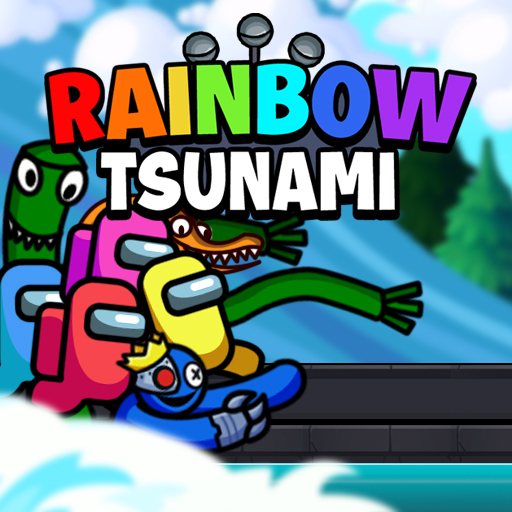
Rainbow Tsunami
Rainbow Tsunami Mods Game
Shapik The Quest

Do Dragons Exist

Goat Rampage

Tower Rise

Horror Nun 2

Sprunki Square Shifted
Obby Survive Parkour

Bees Empire Clicker

Paint Or Hunt

Super Bear Adventure
Brave Squad
Sprunki Hyper Shifted Phase 3 Remastered

Left Or Right Spranki Beats

1 Speed Keyboard Lucky Escape

Traffic Racing

Rider Rush
Sprunki Phase 9 Ggtp

Rooster Road

Please Do Not Feed The Sprunki Brud

Endacopia



How To Play Rainbow Tsunami
The core gameplay of Rainbow Tsunami rests upon intuitive controls that conceal a substantial layer of tactical depth. All interactions are handled through a single gesture: on desktop, players press and hold the left mouse button, while on mobile devices they touch and hold the screen, causing the entire group to leap. The jump's height and travel distance are determined by how long the input is maintained. A brief tap produces a small hop, ideal for navigating tightly packed barriers, whereas a prolonged press triggers a long, elevated jump that can traverse wide chasms or surmount larger vehicles. This straightforward control system forms the foundation of the game's difficulty.
Yet the real measure of ability lies in coordinating the chain of characters trailing the leader. Every follower repeats the leader's jump with a slight but noticeable delay. Consequently, a leap that is perfectly synchronized for the front runner might be too late for those bringing up the rear. Accounting for this lag is essential; initiating the jump a little earlier than appears necessary guarantees that the whole squad, not just the leading segment, clears the obstacle. Crashes do not terminate the session right away; rather, they strip away one or several crew members. The run ends only after every member of the team has been lost. Thus, staying alive demands constant risk evaluation, balancing the advantage of adding another survivor against the greater challenge of controlling a longer, more cumbersome procession. Coins and stars acquired during the journey open up additional progression opportunities, which can be invested in enhancements, special abilities, and cosmetic options—though chasing these rewards must always be tempered by the ongoing priority of keeping the entire group safe.
Rainbow Tsunami Wiki
Overview
Rainbow Tsunami presents a vividly colored endless runner that stands apart through an engaging cooperative survival mechanic. Instead of the conventional solo runner format, where one misstep immediately terminates the run, this title frames the experience as a shared mission. Players direct an autonomously advancing group through a perilous cityscape, with the central goal of saving lost individuals who then integrate into your expanding line. The game elevates the basic act of running into a strategic challenge of crowd coordination, where each additional rescue boosts your scoring capacity but simultaneously makes evading threats more demanding. The fundamental gameplay loop is elegantly straightforward yet remarkably absorbing: endure, enlarge, coordinate, and repeat. As your vibrant assembly expands, the pressure intensifies, demanding a careful equilibrium between chasing a top score and maintaining a compact, maneuverable team. This is an inventive, vivid interpretation of the genre that values thoughtful planning and exact timing just as much as swift reactions.
Core Attributes
- The Collective Tactical Element: The signature aspect of Rainbow Tsunami is its emphasis on a group of runners rather than a lone character. This adds a distinctive strategic dimension, since the lagged response of those following you turns every leap into a judgment call about the entire team's path and security.
- Escalating Stakes and Incentives: The game establishes a compelling reward framework. Saving characters is essential for maximizing your score and triggering specific events, yet it also heightens the challenge by making the group less responsive. This ongoing compromise sustains tension and engagement throughout the entire experience.
- Streamlined and Intuitive Input: All actions are managed through a single, straightforward "press and hold" command. This simplified control method makes the game exceptionally accessible, while the complexity inherent in group dynamics provides a substantial mastery curve for players who refine their timing.
- Rewarding Advancement Framework: Demanding runs are softened by a lasting progression system. Coins earned during gameplay can be spent on a range of enhancements, temporary boosts, and visual customizations. This delivers a concrete feeling of advancement and presents tactical decisions about how best to improve your team's endurance.
Guidance and Advice
- Guide Ahead, Anticipate Behind: Keep in mind that your companions react with a delay. When facing a complicated barrier with a large group, deliberately initiate your jump slightly earlier than feels instinctive. This minor adjustment is the most vital factor in preventing collisions at the rear of the line.
- Recognize the Strength of a Lean Team: Although saving every character is appealing, realize that a smaller, more nimble group frequently serves as a superior survival asset. When traversing especially hazardous sections, it is often wise to prioritize a clean route over gathering every lost individual. A shorter line is more forgiving of timing errors and can be steered with greater accuracy.
- Perfect the Timing of Your Leaps: Distinguish between the brief hop and the extended jump. Employ quick taps to weave through sequences of minor, closely spaced obstacles, and save the sustained, longer jump for gaps or broad vehicles. Choosing the incorrect jump type for a particular hazard is a frequent cause of unnecessary casualties.
- Deprioritize Coin Collection: The temptation of a coin trail leading into a risky passage can be deceptive. Resist the urge to leave a secure route for a handful of extra coins. Losing even a few team members will set you back far more in potential score and run duration than that pickup could ever compensate. The survival of the group must always come first.
- Exercise Caution in High-Risk Areas: As you advance, obstacle arrangements become increasingly dense and demanding. In these zones, it is wiser to reduce the frequency of rescues and concentrate solely on executing clean, flawless jumps. Entering a tough segment with a complete team provides a vital safety margin, so occasionally the most dangerous choice is the one you avoid.
Rainbow Tsunami Frequently Asked Questions
Q: What category does Rainbow Tsunami belong to?
A: Rainbow Tsunami is a vibrant endless runner that transforms the concept of survival into a cooperative group effort. You control a self-moving team as it navigates a hazardous urban landscape.
Q: What objective are you trying to achieve in Rainbow Tsunami?
A: Your primary objective is to steer your team through perilous roads, save characters left behind, and preserve enough active members to keep the run going.
Q: How does the desktop control scheme function?
A: On a computer, press and hold the left mouse button to make your character leap higher. Letting go quickly results in a smaller, more controlled jump.
Q: How does the mobile control scheme function?
A: On a touchscreen device, press and hold anywhere on the display to jump higher. Releasing early triggers a shorter jump.
Q: What occurs if your group makes contact with an obstacle?
A: Hitting an obstacle generally costs you one or several team members instead of instantly ending the session. The run only stops when your entire crew has been eliminated.
Q: In what way do saved characters influence your team?
A: Saved characters attach themselves to the end of your line and boost the number of points you can earn. Certain situations demand a sufficiently large group, yet a longer line is more difficult to defend because each follower mimics your jump with a short delay.
Q: What purpose do coins serve?
A: Coins collected during a run can be used to purchase enhancements, special abilities, and visual customization options.
Q: What role do stars play in Rainbow Tsunami?
A: Stars have the potential to trigger temporary powers or transformations that allow your crew to push through threats and travel a greater distance.
Q: Is it wise to pursue every collectible you see?
A: Not necessarily. Collectibles often lure players into dangerous routes, so keeping your team alive should always come first. Skipping a handful of coins is usually preferable to sacrificing multiple characters before a tough segment.
Q: Which types of hazards can be found in the city?
A: The urban environment is packed with cars, pits, explosives, and various additional dangers.
Q: When is it better to perform a long jump rather than a quick tap?
A: Long jumps are ideal for crossing broad gaps or clearing big vehicles, whereas quick taps give you greater precision when obstacles are positioned in rapid succession.
Q: How should you time your jumps when your crew is very long?
A: If your line is extended, jumping a little earlier than usual ensures that the runners at the back can clear the hazard without being hit.
Q: What makes the game difficult?
A: The central difficulty lies in balancing the size of your group while responding to obstacle patterns that become more dense and complex over time.