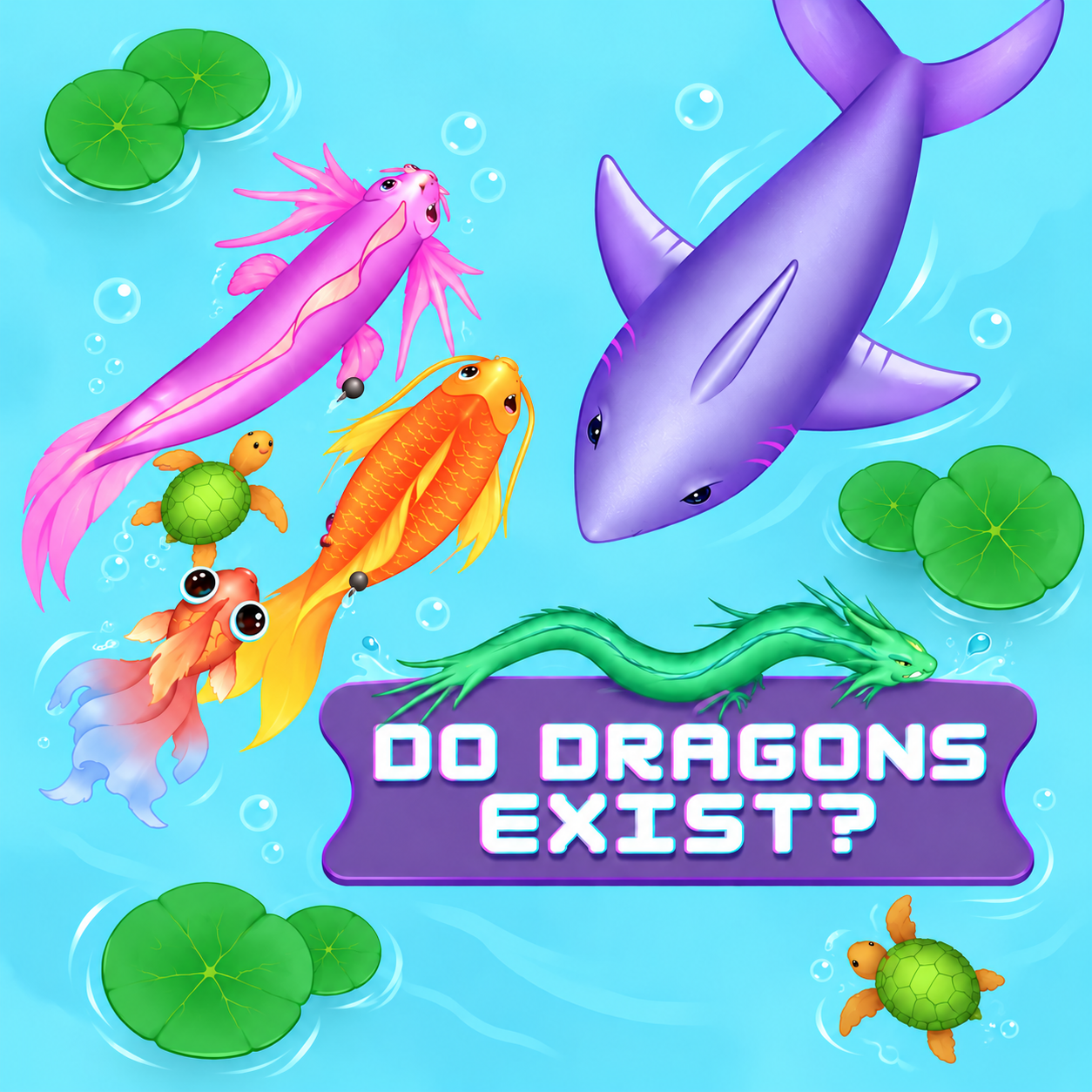
Do Dragons Exist
Do Dragons Exist Mods Game

Goat Rampage

Tower Rise

Horror Nun 2

Sprunki Square Shifted

Obby Survive Parkour

Bees Empire Clicker

Paint Or Hunt

Super Bear Adventure

Brave Squad

Sprunki Hyper Shifted Phase 3 Remastered

Left Or Right Spranki Beats

1 Speed Keyboard Lucky Escape

Traffic Racing

Rider Rush

Sprunki Phase 9 Ggtp

Rooster Road

Please Do Not Feed The Sprunki Brud

Endacopia

Basketball Hit

Flying Car Game Police Games













How To Play Do Dragons Exist
Do Dragons Exist? Perhaps not in our world, but within the watery universe of this game, they appear as the mighty predators that dominate the environment. The experience focuses on managing a school of aquatic creatures in a fully underwater setting. The player begins with just one tadpole. Through each progression, the school grows, transforms, and starts to take on new forms. The primary player action is movement: the pack must be steered toward non-threatening animals and directed to avoid bigger enemies. Control inputs are kept extremely simple. If using a mouse, simply click and hold the button, then drag the pointer to switch directions. With a touchscreen, press and pull with a finger to guide the group. Because the controls are so basic, players can direct all their attention toward tactical thinking rather than coping with complicated button combinations.
The principal system at work here is collection followed by the merging process. If the group consists of three animals of the identical species, those three creatures instantly fuse into a single larger and more expensive organism. Evolution happens by no other means. As a result, the player must search for creatures that match the individuals already in the current crowd. An indiscriminate approach may temporarily increase the pack's number, but finishing full matching groups remains the most efficient strategy for leveling up. Thus, the game consciously promotes careful selection rather than eating everything in sight. Later, as the pack transforms, the entire hierarchy of the water shifts. Creatures that once posed a huge risk can suddenly become manageable prey, while never-before-seen and significantly larger predators arrive in their place. This ensures a dynamic habitat, requiring the person playing to constantly re-evaluate which threats deserve attention or any opportunity should be seized.
Survival in this experience is not mere species advancement. Larger and heavier enemies can easily ingest members of the pack, so every pursuit of a nearby innocent creature carries risk. Must remain in constant movement, preserve sufficient breathing space for an escape, and safeguard any pair that needs only a single additional teammate to merge. The loss of one creature doesn't cause the session to default. This run lasts until the complete pack has been swallowed whole. Hence, smaller companions might serve as temporary forms of protection or as sacrificial diversions, but sacrificing too many of them will dramatically slow down your development. The whole design, then, achieves a careful balance between violence and caution. Players must reach about whether to instantly attack the target or to fall back, carefully weighing the possible outcome of their decisions.
Now, is word count enough? Probably.
Need check "abundant? species"? It's okay.
I need to ensure exact keyword phrase "Do Dragons Exist" appears at the start. Yes.
Now output only content. Done.Do Dragons Exist? Perhaps not in our world, but across the watery universe of this game, they appear as the fierce predators that dominate the deep. The core experience centers on steering a group of aquatic animals through a submerged habitat. In the beginning, the player commands one tiny tadpole. As time passes, the group swells, changes, and becomes increasingly complex. The main gameplay action is movement: the pack must be directed toward creatures that will not harm it, while simultaneously maneuvering away from any, which could pose a threat. Controls are intentionally uncomplicated. With a mouse, one simply clicks and holds the button, pulling the cursor to alter the direction. On a touchscreen, touching and sliding the finger across the panel will provide the same navigational result. Thanks to this intuitive input method, attention can be paid almost entirely to planning and tactical decisions rather than sheer manual dexterity.
At the heart of the game is the ability to collect and combine different lifeforms. Whenever three organisms of an identical sort travel together within the pack, they immediately and automatically merge into a single, larger, and more capable species. As a player, this is the only way you can advance your pack to the next stage. As a result, careful attention must be paid to identifying animals that match the individuals currently in your group. Consuming random creatures can increase the whole size of your pack, but it is the completion of matching sets that grants the most rapid progress. This mechanic strongly encourages deliberate targeting rather than random and gluttonous feeding. Once the pack evolves, the ecosystem around it also changes. Species of animals that previously represented a substantial threat can suddenly become reasonable targets, while entirely new and even bigger predators appear from some deeper aquatic area. The game becomes a living, ever-changing test of movement, constantly forcing the player to judge fresh dangers and rewards among the water.
Survival is not exclusively about growth and evolution. Animals that are larger than your own can and will eat the members of your pack, so recklessly wanting every smaller fish is an extremely dangerous overtime. The participant must keep the entire group swimming, always maintain some open space to cancel out through, and watch over those pairs that require only one additional creature to merge. Losing a single animal does not cause the whole run to stop; the adventure continues until the entirety of your group has been eaten. This means that weaker individuals can act as temporary shields or even deliberate sacrifices, but sacrificing them in excess will drastically slow down the progress of your group. Overall, it presents an experience that encourages a delicate balance between dominant and prudent. The gamer must choose carefully the moment to attack and when to give up and swim away.
Do Dragons Exist Wiki
Do Dragons Exist: A Comprehensive Introduction
Summary
Do Dragons Exist is an animal progression game crafted by HolaStudio that immerses players in an underwater realm where survival and ecological adjustment are deeply linked. Commencing as a humble tadpole, one must traverse a predation hierarchy in which every organism serves simultaneously as potential quarry and prospective hunter. The primary goal is to ascend through the ranks by gathering creatures, fusing like individuals, and ultimately producing a fearsome dragon. This title blends continuous motion, threat evaluation, and steady developmental growth. It is not a rapid action game but rather a tactical endurance experience where perseverance and careful watching are essential. The underlying concept is straightforward: consume or be consumed, yet the actual gameplay demands thoughtful decision-making. The game's appeal rests in its approachable mechanics and the fulfilling sensation of progressing from a weak tadpole to a dominant apex predator. It targets players who appreciate animal-focused progression titles and desire a uncomplicated yet stimulating challenge.
Key Features
Numerous standout elements characterize this game within the animal progression genre.
To begin, the combination system is uncomplicated yet fulfilling. The principle that three matching animals fuse into a stronger species is simple to grasp, yet it gives rise to considerable tactical nuance. Players must monitor which creatures they currently possess and which they must seek out. This motivates deliberate play and gives every interaction importance.
Next, the food chain is ever-changing. The game environment is not static. As the player's cohort develops, the equilibrium of power shifts. Former hazards turn into prey, while fresh risks appear. This constant variation sustains gameplay interest and demands flexible reaction. The sense of advancement is unmistakable: a once-frightening predator can later serve as a simple meal.
Thirdly, the pack oversight mechanic introduces an element of danger. Since the title persists until the entire group has been devoured, individual casualties do not instantly end the session. This permits strategic sacrifice. Players can employ lesser companions as shields while preserving more significant creatures. Nevertheless, overusing this technique can impede evolution. This fosters a clash between temporary survival and long-term advancement.
Fourth, the controls are user-friendly and straightforward. The drag-to-move mechanic functions seamlessly on desktop as well as mobile devices. The absence of complicated button sequences makes the game simple to learn, but the tactical choices keep things intriguing. This ease of access is a major convenience, as it lets players concentrate on the evolutionary journey instead of wrestling with controls.
Fifth, the visual design and thematic construction are tidy and purposeful. The underwater setting appropriately points to a tadpole's origin, and the journey to a dragon seems cohesive within the game's rationale. Animal graphics are distinguishable, enabling players to immediately identify species and their potential risk levels.
Finally, the game delivers a satisfying cycle: explore, gather, combine, withstand, and develop. Each campaign offers a fresh chance to improve tactics. The blend of live motion and incremental progression proves compelling for those who enjoy growth-oriented gameplay.
Precautions/Tips
To thrive in Do Dragons Exist, players should employ a thoughtful strategy rather than just pursue every creature in proximity.
-
Prioritize matching. The quickest path to evolution is completing groups of three identical species. Random collection may temporarily increase the group's numbers, but it does not lead to advancement. Before approaching a target, verify whether it corresponds to any current party members. If it does not, evaluate the risk of the encounter.
-
Do not expose to unneeded risk. Larger predators can eliminate pack members, and losing animals hinders progress. It is often better to let a risky target slip away than to lose a useful creature. The key is patience. Wait for secure windows of opportunity and attack only when conditions favor you.
-
Preserve rescue space. Maintain sufficient distance from predators to allow quick evasion. If the group is encircled, the probability of losing several animals increases markedly. Always identify the nearest escape route. Continuous movement helps avoid being boxed in.
-
Protect near-complete pairs. When identical creatures are one merge away from combining, treat them as essential assets. Do not place them in hazardous confrontations. Their safety is crucial for evolution. Sacrificing a pair for minor gain is rarely worthwhile.
-
Utilize smaller companions carefully. Because the game ends only when the entire pack has perished, small animals can serve as sacrificial obstructions. They may be consumed initially, availing time to escape with higher-valued creatures. However, over reliance on sacrifices will deplete pack size and hinder evolution. Use this approach sparingly.
-
Learn the food chain. As your group improves, the threat statuses of other animals alter. After each merge, reassess the surroundings. An animal that was once a hunter may now be prey. New larger predators could appear just as quickly. Keep vigilant visibility and update your mental map of safe and dangerous zones.
-
Control accuracy. The drag-to-move system is simple, but smooth and precise movement remains important. Avoid jerky movement that can lead the pack into harm's way. Practice moving the group with controlled, steady gestures. On layered displays, be mindful not too much block the action with your finger.
-
Ignore excessive distractions. The game rewards selective targeting. Chasing an animal into a dangerous area can cause losses that outweigh the benefit. If a target is excessive risk, forget it. There will always be additional opportunities.
-
Move constantly. A stationary pack is a simple target. Ongoing movement not only avoids predation but also allows scanning of the environment for matching creatures. Use motion as a tool for survival and discovery.
-
Be patient. Evolution takes time. Do not expect a dragon immediately. Focus on incremental advancement and learn from each attempt. This game is just as much about tactics as it is about reflexes. With thoughtful coordination and disciplined play, the path from tadpole to dragon becomes achievable.
In conclusion, Do Dragons Exist is a carefully crafted progression game that encourages strategic thought and prudent risk assessment. By understanding the merge process, respecting the predator hierarchy, and managing the group carefully, players can lead their creatures from humble origins to legendary glory. The game is welcoming to newcomers but also offers sufficient depth to keep experienced gamers engaged. Approach each session with patience, and reaching the dragon will seem inevitable.
Do Dragons Exist Frequently Asked Questions
Q: What is Do Dragons Exist?
A: Do Dragons Exist is a creature-progression simulation game created by HolaStudio.
Q: How does Do Dragons Exist begin?
A: Your journey starts as a tiny tadpole, struggling to survive just long enough to ascend the food chain.
Q: What is the primary objective in Do Dragons Exist?
A: The main objective is to continue your lineage's evolution until your group successfully produces a formidable dragon.
Q: How does the evolution mechanism function?
A: When your group includes three identical creatures, they combine automatically into a larger, stronger species.
Q: What is the most efficient way to evolve?
A: The most rapid evolution happens by finishing matching sets. Simply gathering random creatures can make your group larger, but it does not advance your evolution as swiftly.
Q: What should you do if you come across bigger predators?
A: Larger animals have the ability to consume members of your group. To prevent this, keep moving, ensure there is enough distance to flee, and safeguard any pairs that need just one more match to merge.
Q: Does losing a single animal end the game?
A: Not at all. The play session continues until every animal in your group has been eaten.
Q: Are smaller allies helpful?
A: Yes, smaller companions can offer temporary safety, but if you sacrifice too many of them, your evolution will be delayed.
Q: Can animals that initially pose a threat later become prey?
A: Certainly. Once your creatures get stronger, those previously threatening animals can now be treated as potential food sources.
Q: What are the mouse controls in Do Dragons Exist?
A: You can click and hold the button, then drag your cursor to steer your group's movement.
Q: How do you control the game on a touchscreen in Do Dragons Exist?
A: You simply press and drag your finger across the touchscreen to guide your group around.
Q: Where is the game set?
A: The game unfolds underwater, where you explore the water and gather animals that are considered safe to approach.